

Table of Contents
ToggleKunal Shah Appointed Global Head of WhatsApp: Inside Meta's $900M CRED Deal
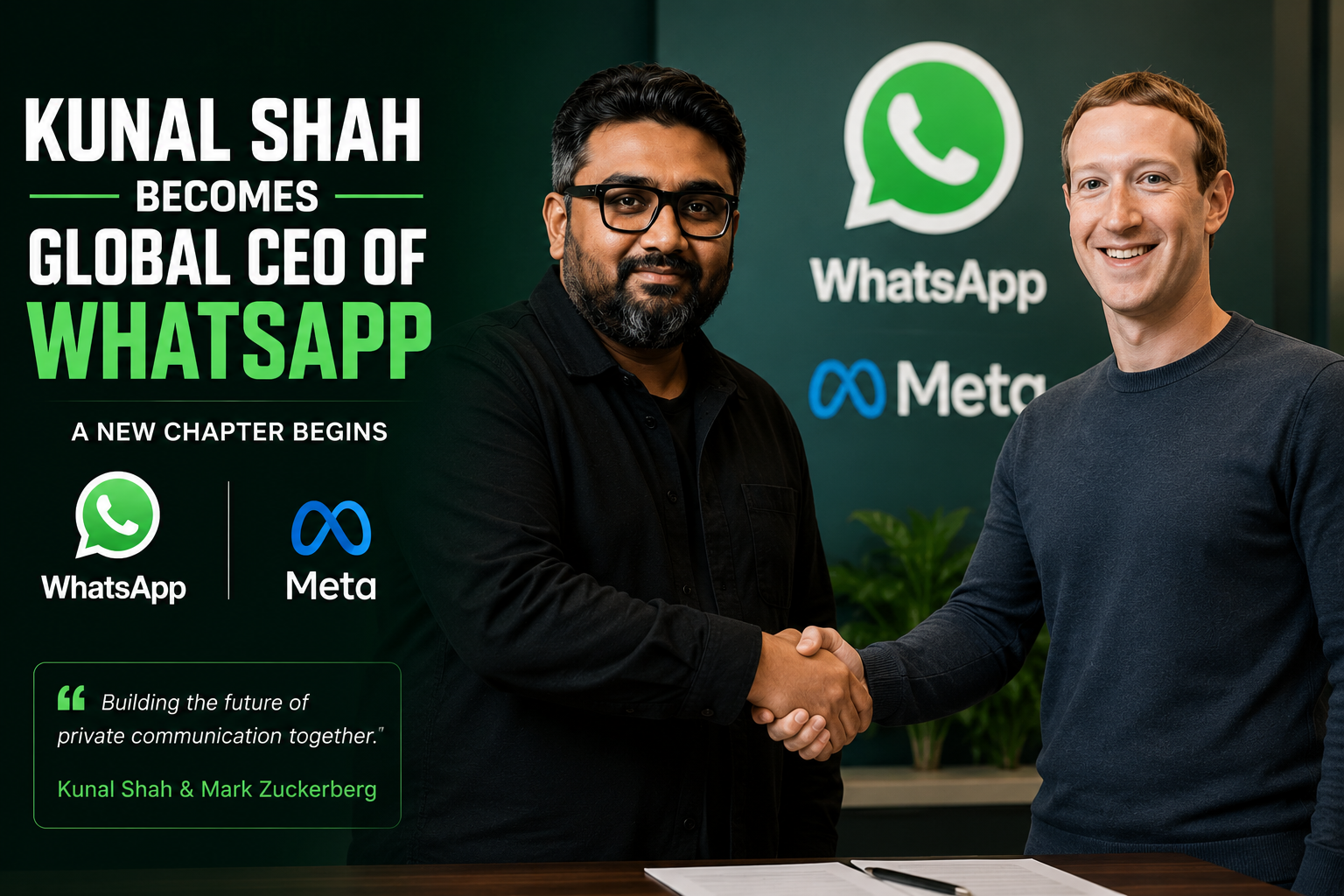
It began with an unexpected cold email from Meta Chief Product Officer Chris Cox. He simply sought strategic advice on choosing the next leader for Big Tech's most vital messaging asset. Instead, the conversation left an immediate impression, prompting Mark Zuckerberg to make a decisive move on June 22, 2026. Kunal Shah has officially been appointed as the Global Head of WhatsApp. Bypassing traditional corporate ladders entirely, the Mumbai philosophy graduate and serial entrepreneur now commands a platform serving over 3 billion monthly active users.
Who is Kunal Shah?
At 42 years old, Kunal Shah represents a rare breed of emerging market operators. A former philosophy student and MBA dropout, his entrepreneurial journey began with co-founding FreeCharge in 2010. That venture culminated in a $449 million acquisition by Snapdeal in 2015, marking one of India's largest consumer internet exits at the time.
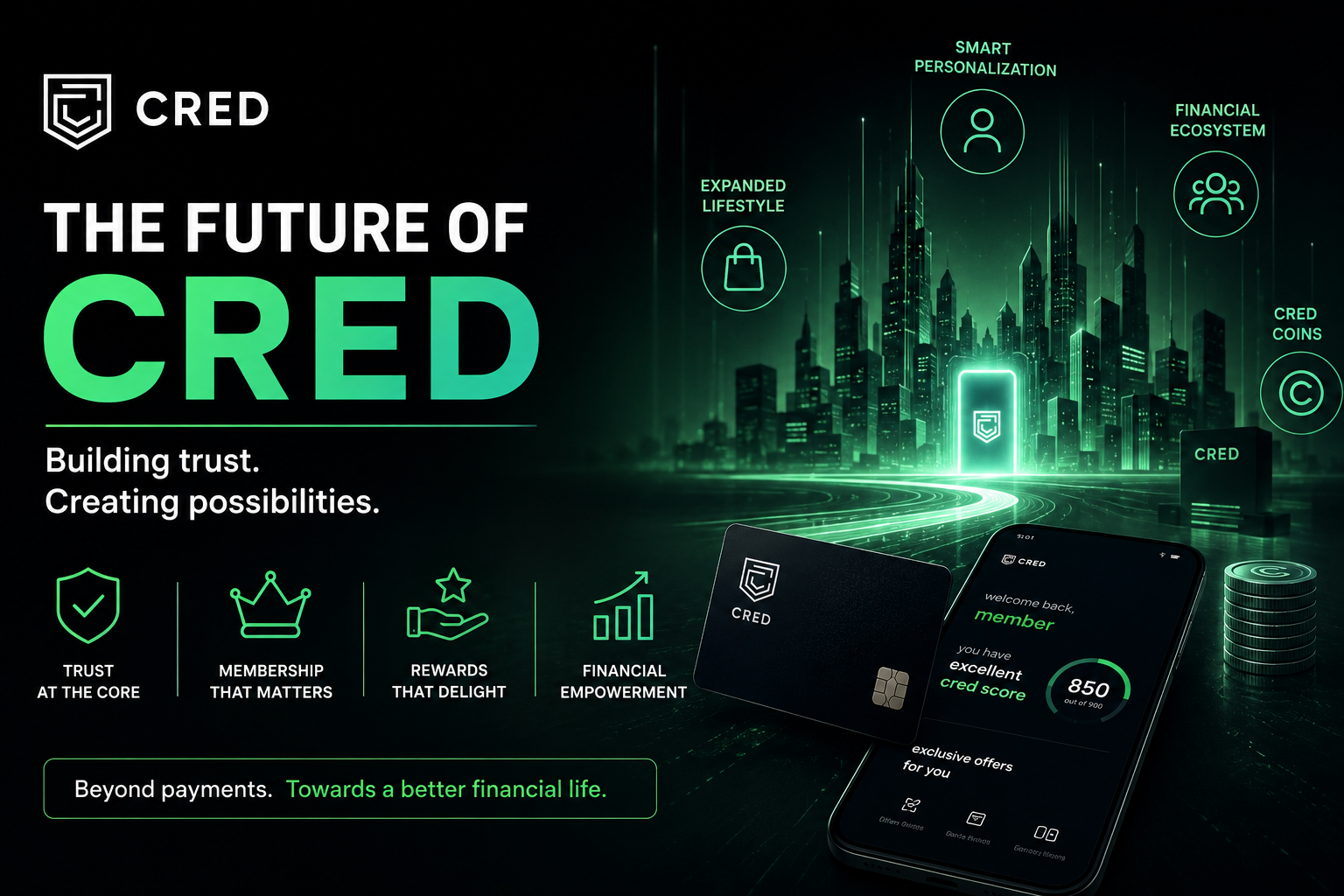
In 2018, according to reports in TechCrunch, he founded CRED using $1 million of his personal capital. Under his leadership, CRED scaled to 17 million active users by enforcing a strict 750 credit score entry gate. Today, the fintech powerhouse manages over 40% of India's credit card bill payment volume and processes a staggering INR 8.5 lakh crore annually.
After expanding into UPI, lending, and wealth management, CRED celebrated its first profitable quarter in 2026. Having personally backed over 250 Indian startups as an angel investor, Kunal Shah becomes the very first non-corporate founder handed the global reins of a premier Silicon Valley tech giant.
The $900M CRED Deal Decoded
Announced simultaneously with the leadership restructuring, Meta executed a massive $900 million financing round for CRED. The Meta CRED investment is structured through a mix of primary capital injection and secondary share purchases from existing backers, valuing the company at $4.5 billion post-money. While this valuation sits below its 2022 peak of $6.4 billion, it secures Meta a significant 20% minority stake.
Crucially, Kunal Shah confirmed that Meta receives zero access to CRED's sensitive member financial data, safeguarding Indian user privacy. Independent market analysts describe the transaction as an elite acqui-hire disguised as a minority shareholding. This strategic playbook directly mirrors Meta's recent partnership with Scale AI founder Alexandr Wang.
Ultimately, Mark Zuckerberg is acquiring world-class fintech intuition and operating execution rather than raw data pipelines. Miten Sampat, CRED's strategy head since 2020, now steps up as interim CEO while the board prepares for an eventual CRED IPO.
Why Meta Chose Shah: Solving a $6.6B Failure
This bold executive selection solves a glaring strategic dilemma. Despite investing over six years and $6.6 billion, Big Tech has struggled to conquer the Indian digital commerce ecosystem. When WhatsApp Pay debuted in 2018, strict regulatory caps stalled onboarding. By the time these restrictions vanished in late 2024, competitors had entrenched themselves.
Current May 2026 NPCI data reveals that PhonePe and Google Pay command 79% of the UPI market. Conversely, WhatsApp payments India volume languishes at a marginal 0.65% market share, ranking ninth nationwide. This creates a severe monetization gap.
Users frequently discover products on Instagram and negotiate with merchants on WhatsApp, only to finalize payments via PhonePe. Meta loses that critical final transaction fee. The core objective for Kunal Shah is to close this loop. His deep operating experience in high-friction markets like India, Brazil, and Mexico makes him uniquely qualified to transform raw messaging dominance into transactional revenue.
Future of WhatsApp Under Kunal Shah
The WhatsApp future 2026 roadmap relies heavily on executing three strategic transformations. First, transitioning the app into a full-scale conversational commerce platform modeled after WeChat in China. Second, deepening generative artificial intelligence mechanics across business interactions.
Following the successful rollout of AI-generated response drafts in March 2026, Kunal Shah is expected to embed automated merchant checkout workflows directly into chat threads. Third, expanding revenue diversification through premium subscription tiers recently launched across Facebook, Instagram, and WhatsApp.
As a direct Will Cathcart replacement, his mandate involves overhauling payment user interfaces and building native fintech lending products within the ecosystem. To support this massive computational thrust, Meta recently partnered with Reliance Industries to construct a dedicated 168MW AI data center in Jamnagar, Gujarat. The primary hurdle remaining is navigating intense regulatory scrutiny across emerging economies while battling deeply rooted domestic payment aggregators.
CRED After Shah & Indian Startup Impact
Back home in Bengaluru, CRED enters its next growth phase under interim CEO Miten Sampat. Fortified by fresh Big Tech capital and a robust lending book managing INR 22,000 crore in assets, the company is accelerating its path toward public markets. With active members demonstrating high engagement across wealth and insurance products, CRED's average revenue per user remains three times higher than standard UPI apps.
However, this Silicon Valley alignment triggers industry concern. Domestic competitors including PhonePe, Paytm, IndiaMart, and MobiKwik must now compete against global monopolies armed with specialized local leadership. While this deepens foreign capital stakes in India, Kunal Shah proves that Indian startup founders now dictate global product roadmaps.
Conclusion & Frequently Asked Questions
Ultimately, this historic appointment transcends standard executive reshuffling. It marks a fundamental structural shift in how Silicon Valley recruits top talent and expands within frontier markets. A simple cold email evolved into a monumental $900 million transaction and a global operational challenge. By placing Kunal Shah at the helm, Big Tech acknowledges that the future of digital commerce will be forged in the crucible of Indian fintech.
Who is Kunal Shah and why is he famous?
Kunal Shah is a celebrated Indian entrepreneur who founded FreeCharge (sold for $449 million) and CRED. He is renowned for his deep fintech philosophy and angel investing across 250+ startups.
Why did Meta invest $900 million in CRED?
Meta invested $900 million for a 20% stake primarily to secure Kunal Shah's leadership for WhatsApp, structuring the transaction as an elite acqui-hire partnership.
Will Meta have access to CRED user data?
No. Kunal Shah explicitly confirmed that Meta receives zero access to CRED's member financial data or customer lists.
What happened to WhatsApp's previous head Will Cathcart?
Will Cathcart is transitioning to a newly created internal role at Meta focused on building experimental products from the ground up.
What is the future of WhatsApp under Kunal Shah?
WhatsApp will pivot aggressively toward conversational commerce, embedded AI merchant checkouts, and native Indian fintech integrations.