
Table of Contents
ToggleAlphabet's $80 Billion Play: The 4 Semiconductor Stocks Winning the Most
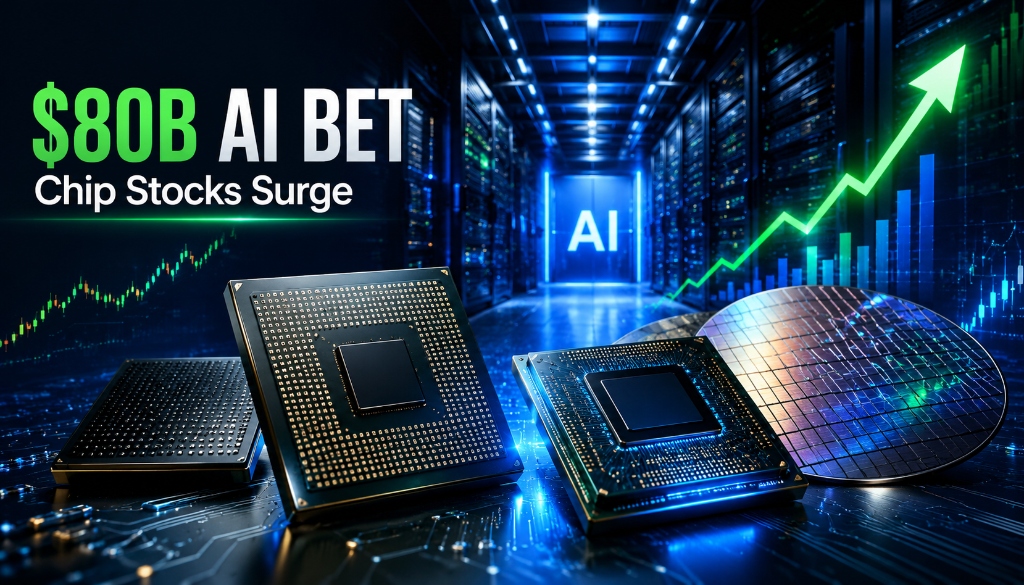
The artificial intelligence hardware race has reached unprecedented financial magnitudes. A monumental shift is occurring as Alphabet accelerates its massive data center expansion plans. The core driver of this market movement is the unprecedented Alphabet AI infrastructure funding initiative, raising a staggering $80 billion specifically allocated for high-performance computing clusters and generative model training facilities.
This sheer volume of capital injection is reshaping the technology hardware sector. While Alphabet solidifies its position as a dominant cloud provider, the true beneficiaries of this capital expenditure are the chipmakers and foundries tasked with supplying the specialized hardware required. The demand for next-generation silicon is outstripping supply across the entire ecosystem.
For investors and tech enthusiasts analyzing the impact of the Alphabet AI infrastructure expansion, four specific semiconductor companies stand out as the primary beneficiaries of this historic capital deployment.
Understanding the $80 Billion Catalyst
The scale of this funding cannot be overstated. Alphabet is strategically securing debt and leveraging substantial free cash flow to outmaneuver competitors in the cloud computing and large language model domains. A massive portion of this dedicated Alphabet AI infrastructure budget is earmarked exclusively for procuring custom and off-the-shelf processing units.
Unlike previous technology cycles that focused heavily on software abstraction, the current artificial intelligence boom is deeply hardware-constrained. Every new frontier model requires exponentially more computational power than its predecessor. To build data centers capable of handling these workloads, Alphabet must rely heavily on external semiconductor manufacturing and design partners.
Consequently, the Alphabet AI infrastructure spend flows directly into the revenue streams of companies providing GPUs, high-bandwidth memory, custom ASICs, and optical networking components. This creates a highly predictable supply chain that savvy market participants are closely tracking.
1. NVIDIA: The Undisputed Standard
NVIDIA remains the absolute cornerstone of modern computational capabilities. Despite Alphabet's internal chip programs, the sheer demand for standardized, highly optimized generative models requires immense volumes of NVIDIA hardware.
The Hopper and Blackwell Advantage
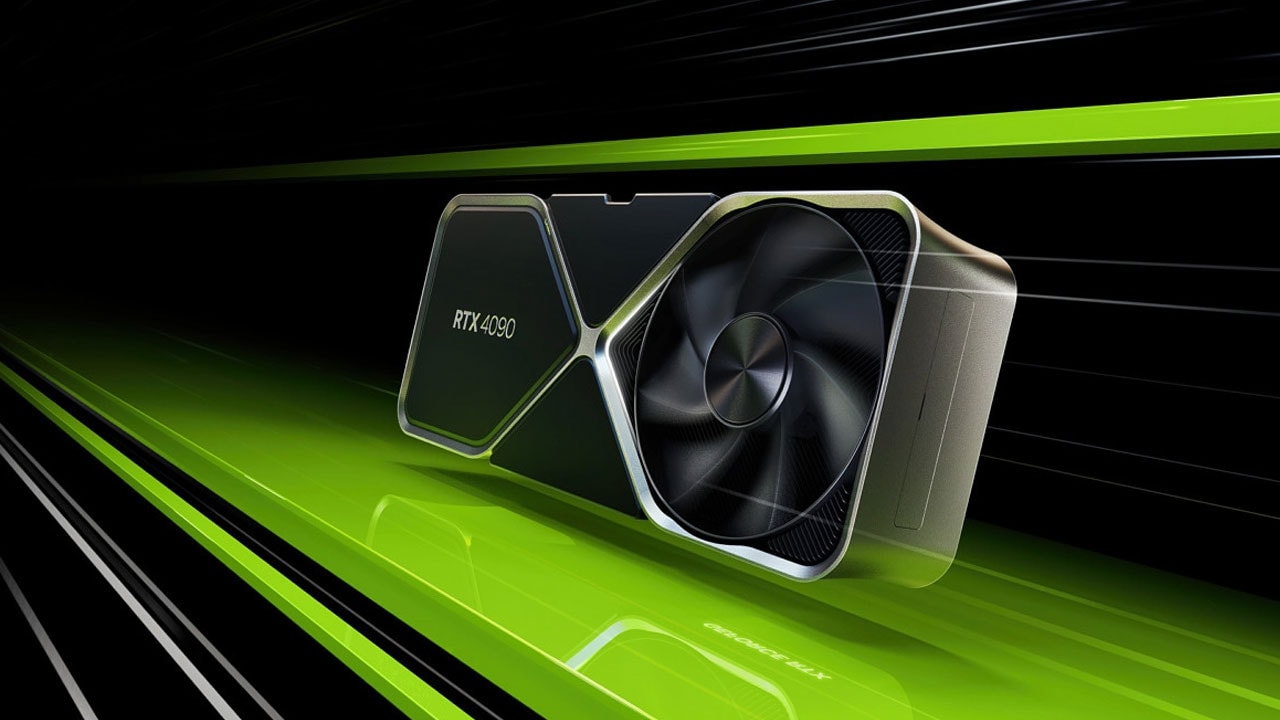
Alphabet is deploying vast clusters of NVIDIA H100 and the newer B200 accelerators across its Google Cloud network. The CUDA software ecosystem makes these GPUs practically mandatory for enterprise clients renting compute power. As a direct result, a massive slice of the Alphabet AI infrastructure capital is funneled into NVIDIA's order books.
NVIDIA's ability to maintain incredibly high profit margins on these accelerators ensures that they will remain the most direct financial beneficiary of any major cloud provider's expansion strategy.
2. Broadcom: The Custom Silicon Partner
While NVIDIA captures headlines, Broadcom operates quietly as a pivotal partner in Alphabet's internal silicon strategy. Google has developed its own custom processors, known as Tensor Processing Units, to optimize specific internal workloads cost-effectively.
Broadcom has historically been the primary co-design partner for these TPUs. The massive Alphabet AI infrastructure investment guarantees a surge in demand for the latest iteration of TPU v5 and future v6 hardware. Broadcom provides crucial intellectual property blocks and handles the complex packaging required for these custom ASICs.
Furthermore, Broadcom is a leader in advanced networking switches. As the Alphabet AI infrastructure scales to clusters featuring tens of thousands of chips, the optical interconnects and networking silicon supplied by Broadcom become just as critical as the compute engines themselves.
3. TSMC: The Foundational Manufacturer
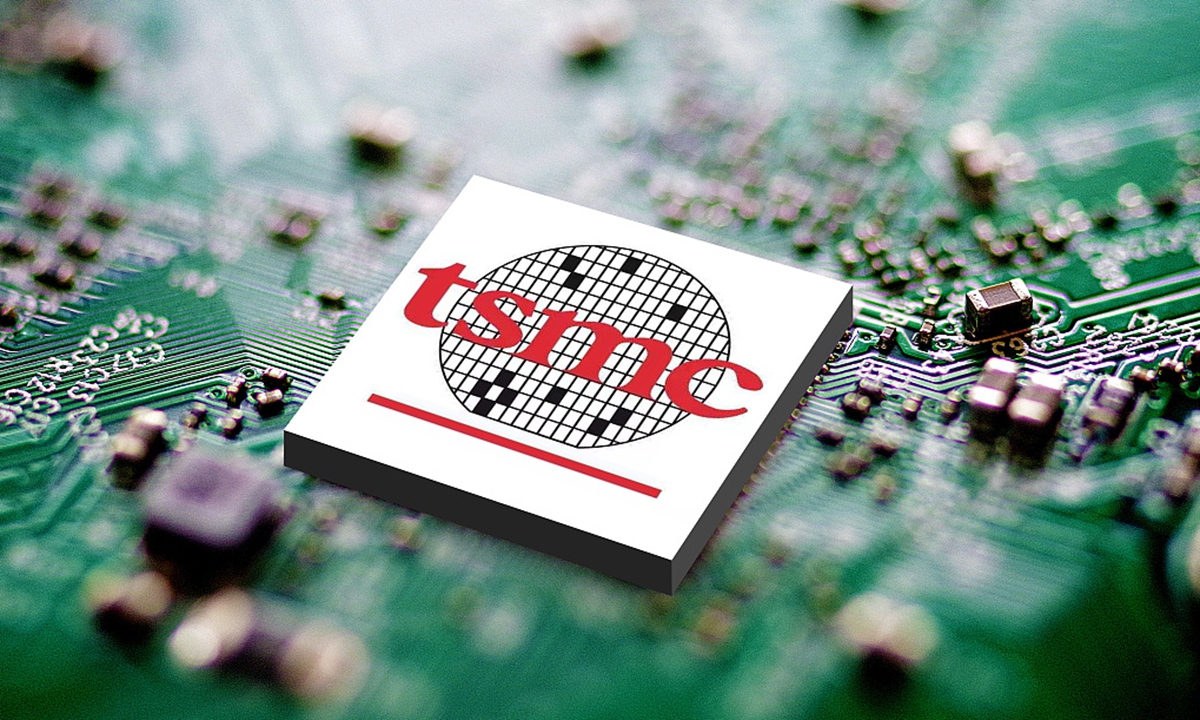
Taiwan Semiconductor Manufacturing Company stands uniquely positioned as the indispensable foundry for virtually the entire high-performance computing industry. Whether Alphabet purchases from NVIDIA or designs its own chips with Broadcom, the physical manufacturing is invariably outsourced to TSMC.
Advanced Nodes and Packaging
The processors fueling the Alphabet AI infrastructure require the absolute bleeding-edge of semiconductor fabrication, utilizing 3-nanometer and soon 2-nanometer process nodes. TSMC has a near-monopoly on high-yield production at these microscopic scales.
Additionally, TSMC's proprietary CoWoS packaging technology is essential for assembling complex accelerators that integrate processing cores with High Bandwidth Memory. As Alphabet scales its hardware deployments, TSMC's manufacturing lines will see sustained, massive volume orders.
4. Marvell Technology: The Interconnect Backbone
Marvell Technology represents the critical networking infrastructure play. Data centers are shifting from traditional copper connections to advanced optical networking to handle the massive data throughput required by distributed computing systems.
| Technology Area | Relevance to Alphabet |
|---|---|
| Electro-Optics | Essential for connecting thousands of server racks at high speeds. |
| Custom Compute | Partnering on custom accelerator solutions alongside other fabless firms. |
| Alphabet AI Infrastructure | Securing major design wins for next-generation optical data center links. |
Market Implications and Strategy
"The capital expenditure from hyperscalers is creating a supercycle for semiconductor equipment and networking providers."
The strategic rollout of the Alphabet AI infrastructure budget is a strong signal of secular growth in the hardware space. When an entity with Alphabet's resources commits $80 billion to data centers, it guarantees multi-year revenue visibility for the entire hardware supply chain.
Investors are closely monitoring these four stocks because they represent different layers of the same technological stack. NVIDIA provides the raw compute, Broadcom and Marvell handle the custom architectures and networking interconnects, while TSMC underpins the physical manufacturing of the entire ecosystem created by the Alphabet AI infrastructure push.
Conclusion & Frequently Asked Questions
The Long-Term Outlook
The massive capital deployment toward Alphabet AI infrastructure marks a defining moment in technology architecture. As generative models become more complex, the dependency on robust semiconductor supply chains deepens. For NVIDIA, Broadcom, TSMC, and Marvell, this $80 billion initiative acts as a powerful catalyst for sustained corporate growth and innovation leadership.
What exactly is the Alphabet AI infrastructure investment?
It represents a major $80 billion funding initiative by Alphabet specifically directed at expanding their data centers, purchasing advanced GPUs, and building custom networking required for advanced machine learning operations.
Why is NVIDIA the primary beneficiary?
NVIDIA produces the industry-standard GPUs and software frameworks required to train and run the most complex large language models, making their hardware essential for any cloud provider's expansion.
How does Broadcom factor into Alphabet's plans?
Broadcom acts as a crucial co-design partner for Google's proprietary Tensor Processing Units (TPUs) and supplies advanced networking switches needed for high-speed data transfer between servers.
Are there risks to these semiconductor stocks?
While the Alphabet AI infrastructure spend provides massive tailwinds, risks include potential supply chain bottlenecks, geopolitical tensions impacting manufacturing in Taiwan, and potential shifts in computing architectures.