


Table of Contents
ToggleClaude Fable 5: Anthropic's Most Powerful Public Model Yet
The generative technology landscape has just witnessed a monumental shift. On June 9, 2026, Anthropic officially launched Claude Fable 5, immediately cementing its position as the most formidable public model available today. This is not merely an incremental update; it represents the debut of an entirely new echelon in machine learning architecture.
The model introduces the Mythos-class tier, strategically positioned above the already capable Opus tier. It brings the raw, unbridled reasoning power of the Project Glasswing partner system into the hands of the general public, wrapped in robust, enterprise-grade safety mechanisms. For developers and businesses alike, Claude Fable 5 unlocks possibilities that were previously confined to closed-door research laboratories.
As the demand for long-horizon autonomous agents grows, this new flagship stands ready to redefine software engineering and scientific research workflows entirely.
What Is Claude Fable 5?
To understand this release, one must look at Anthropic's revised hierarchy. Sitting at the absolute pinnacle is the new Mythos-class tier. Claude Fable 5 is directly built upon the identical underlying architecture as Mythos 5, a restricted system reserved exclusively for Project Glasswing partners.
The distinction between the two lies purely in safeguards. The name itself is a deliberate semantic choice. The word Fable derives from the Latin fabula meaning that which is told, serving as a counterpart to the Greek word mythos. This linguistic pairing perfectly encapsulates the model's nature: it is the safe, publicly accessible iteration of the Mythos technology.
By leveraging this tier, Claude Fable 5 transcends standard conversational bounds. It is engineered from the ground up to handle massive, multi-step operations autonomously without requiring constant human steering. Anthropic has clearly drawn a line in the sand, positioning it not just as a chatbot, but as an autonomous reasoning engine.
Unprecedented Capabilities: What Can Claude Fable 5 Do?
The performance metrics for Claude Fable 5 establish state-of-the-art results across nearly all tested industry benchmarks. It demonstrates exceptional proficiency in software engineering, intense knowledge work, advanced vision tasks, and frontier scientific research.
Software Engineering Dominance
On the rigorous SWE-Bench Pro evaluation, it achieved an astounding 80.3 percent score, a massive leap in capability. It was also the top scorer on Cognition's FrontierCode evaluation, generating high-quality production code even on medium effort settings.
In a real-world application, financial infrastructure company Stripe utilized Claude Fable 5 to execute a full codebase migration across a 50-million-line Ruby repository. A task slated to consume an entire engineering team for over two months was completed by this system in exactly one day.
Vision, Memory, and Analytics
The visual processing suite sets a new standard. It can extract granular data from complex scientific figures, reconstruct complete web applications from mere screenshots, and famously defeated the game Pokemon FireRed using only a visual harness, achieving what previous releases could only do with external tool assistance.
Furthermore, persistent file-based memory improved its performance three times more than previous iterations in comparative testing. It is the first architecture in its lineage to break the 90 percent barrier on complex, long-running analytics benchmarks. For trading firms like IMC, it aced analytical evaluations spanning conceptual reasoning and expected-value forecasting.
The Safety Architecture
Releasing a Mythos-class model to the public required a paradigm shift in safety. Claude Fable 5 integrates newly developed classifiers specifically tuned to detect misuse vectors in cybersecurity, synthetic biology, chemistry, and unauthorized model distillation.
The implementation of these safeguards is uniquely graceful. Instead of generating an outright refusal when a sensitive query is detected, it dynamically falls back to the next-most-capable tier, Opus 4.8. Anthropic reports that these safeguards trigger in less than 5 percent of average sessions, ensuring minimal disruption for legitimate developers.
Security auditing has been rigorous. In focused cybersecurity testing against thirty recognized public jailbreak techniques, the engine complied with zero harmful single-turn requests. An extensive external bug bounty program encompassing over one thousand hours of adversarial testing yielded no universal jailbreaks.
For enterprise confidence, Anthropic instituted a strict 30-day data retention policy for business customers utilizing Mythos-class deployments. This retention is isolated entirely for safety monitoring and is explicitly excluded from future model training.
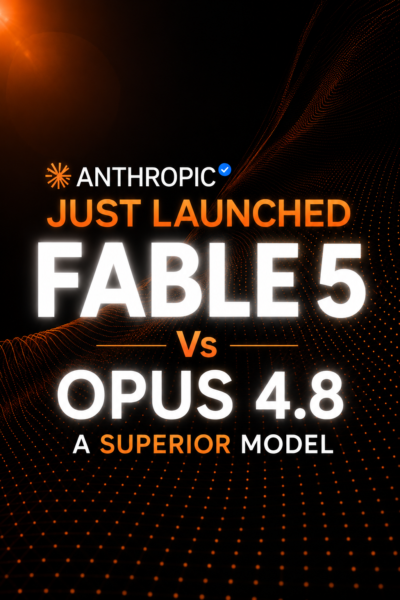
Claude Fable 5 vs Opus 4.8
It is crucial to understand that Claude Fable 5 is not simply a refined version of Opus; it occupies an entirely separate tier above Opus. While Opus remains the highly capable secondary layer, the new flagship commands double the pricing due to its immense computational depth.
| Metric | Claude Fable 5 | Opus 4.8 |
|---|---|---|
| Capability Tier | Mythos-Class (Top Tier) | Opus-Class (Second Tier) |
| SWE-Bench Pro Score | 80.3 Percent | 69.2 Percent |
| Analytics Benchmark | Over 90 Percent | Under 80 Percent |
| File-Based Memory Edge | 3x Greater Efficiency | Standard Efficiency |
| Input / Output Pricing | $10 / $50 per Million | ~$5 / $25 per Million |
Claude Fable 5 vs Sonnet 4.6
Claude Fable 5 sits a full two tiers above Sonnet 4.6. While the flagship targets highly complex, long-horizon autonomous tasks that require deep reasoning over vast codebases, Sonnet 4.6 remains the optimal choice for cost-efficient, everyday operations.
| Feature Focus | Claude Fable 5 | Sonnet 4.6 |
|---|---|---|
| Ideal Workload | Long-horizon autonomy, scientific research | Everyday chat, simple to medium tasks |
| Cost Efficiency | Premium Pricing | Highly Economical |
| Architecture Tier | Mythos-Class | Sonnet-Class |
Industry Reception: What Developers Are Saying
"It's opened up a class of long-horizon problems that were out of reach for earlier models."
"A level of autonomy and reliability that exceeded previous benchmarks."
"A clear step forward on agentic coding and prototyping."
"In blind review, our lawyers found its redlines matched or beat our current model every time."
Pricing, Access, and Final Verdict
Cost and Availability
Claude Fable 5 is priced at $10 per million input tokens and $50 per million output tokens. Developers can leverage prompt caching to secure up to a 90 percent discount. Notably, this rate is approximately half the price of the Mythos Preview.
The system is available immediately via the API using the model identifier claude-fable-5. It is also accessible across the Platform, Code workspace, consumption-based Enterprise plans, Amazon Web Services, Google Cloud, and Microsoft Foundry.
As an introductory offer, users on Pro, Max, Team, and seat-based Enterprise plans have free access included until June 22, 2026. From June 23 onward, continued access will require standard usage credits until global compute capacity expands further.
The Final Verdict
Claude Fable 5 completely shifts the paradigm for production-grade, autonomous workflows. By bringing Mythos-class reasoning out of the laboratory and into the public domain with stringent safeguards, Anthropic has delivered a tool that enterprise teams and senior developers absolutely must integrate. If your workflow involves massive codebase refactoring or complex analytical reasoning, the higher pricing tier is easily justified by the unparalleled time savings.
Is Claude Fable 5 better than Opus 4.8?
Yes. It operates on the newly introduced Mythos-class architecture, positioned directly above Opus. It scores significantly higher on coding and analytics benchmarks, making it superior for complex, multi-step autonomous tasks.
How much does Claude Fable 5 cost?
Pricing is structured at $10 per million input tokens and $50 per million output tokens via the API. Substantial discounts of up to 90 percent are available when properly utilizing prompt caching features.
When does the free access period end?
Seat-based Enterprise, Team, Max, and Pro tier users receive inclusive access until June 22, 2026. Starting June 23, users will need to allocate specific usage credits to access the framework until wider capacity is established.
What happens if the safety classifiers trigger?
Unlike older generations that present an outright refusal message, this framework will automatically fall back to the next-most-capable tier, which is Opus 4.8, to handle the request responsibly without breaking the application flow.
Can it perform vision tasks?
Yes, it introduces state-of-the-art vision capabilities. It is powerful enough to extract complex data directly from scientific figures and completely rebuild web applications by analyzing screenshots.